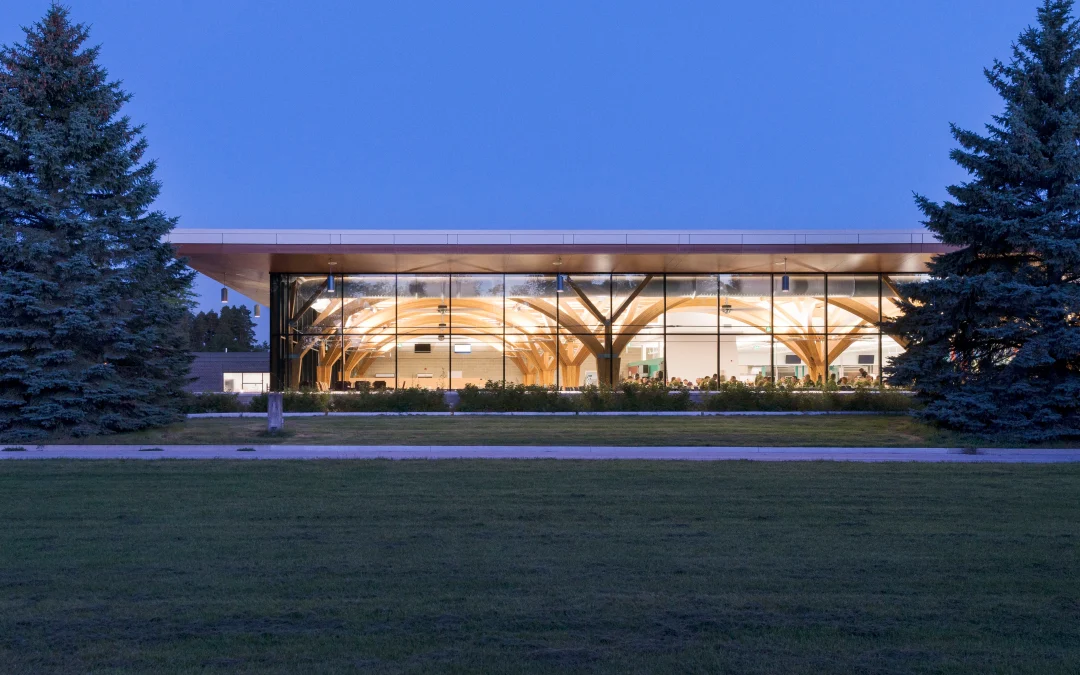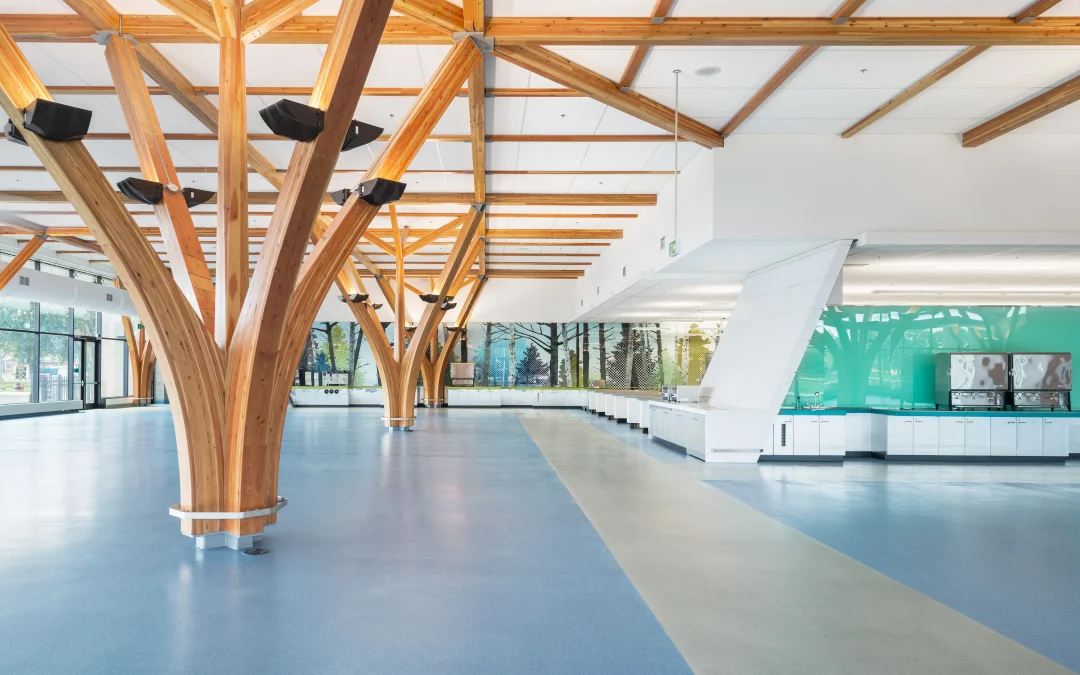
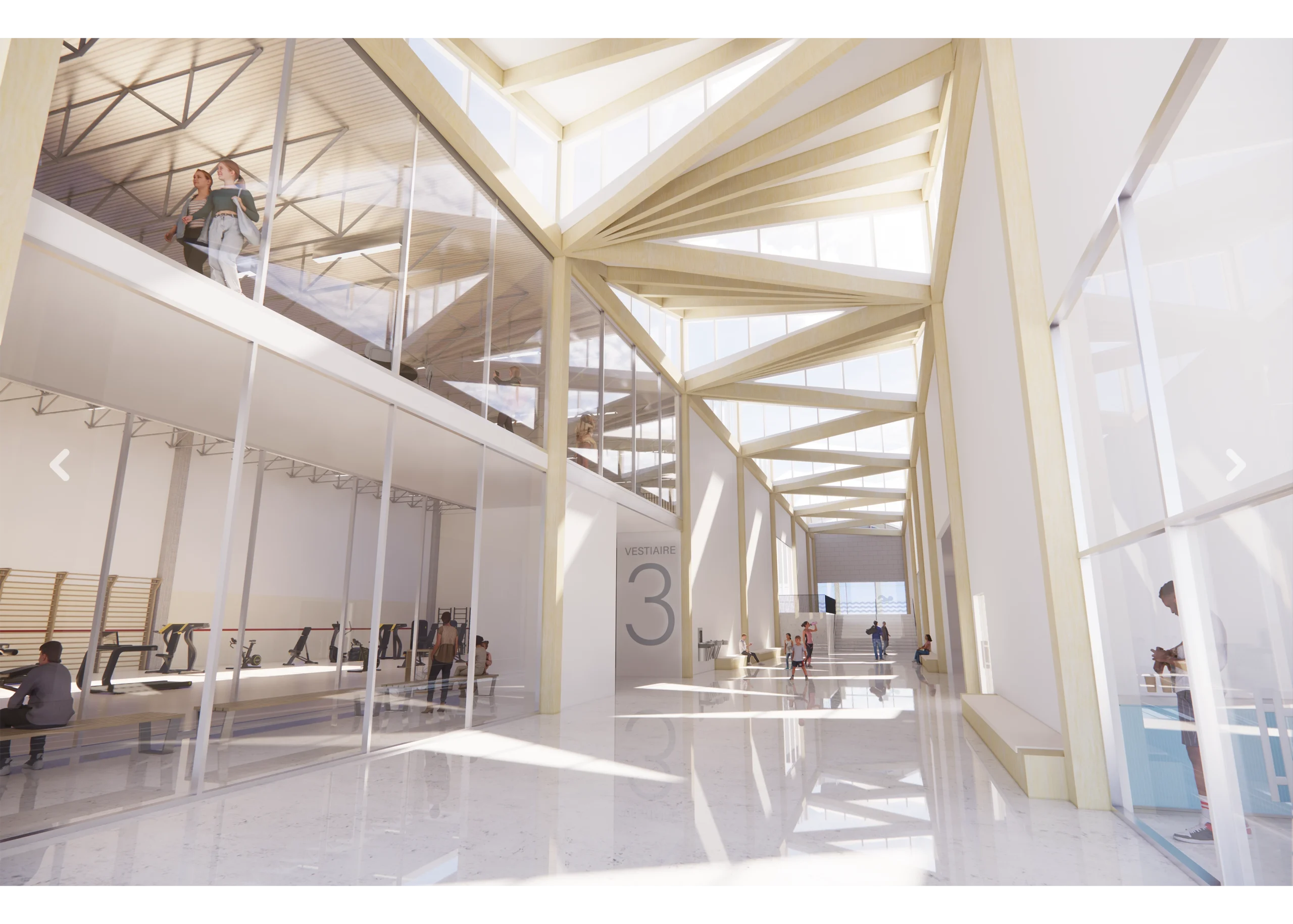
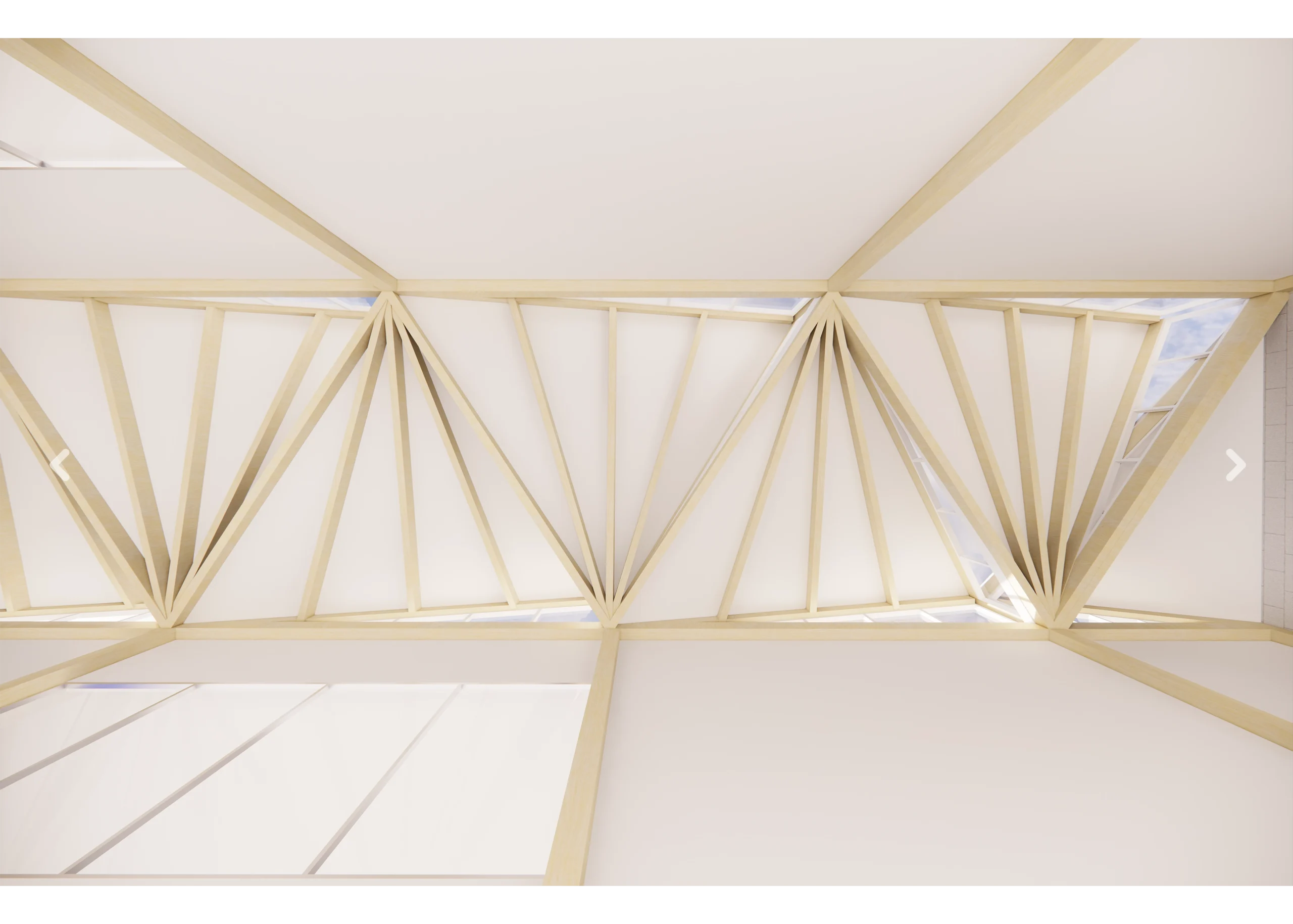
The project analysis revealed important challenges, notably a confusing circulation and a lack of natural light within the sport centre. To fix these issues, a radical yet harmonious approach is proposed. Rather than replacing the existing agora, a new concept suggests creating two intersecting circulation paths that serve both as social spaces and thoroughfares, effectively organizing the space while allowing abundant natural light to reach the core. These pathways will redefine circulation patterns, simplify movement between sports areas, and create a contemporary atmosphere. In addition, efforts are being made to improve accessibility, with one axis forming a new east–west entrance and exit, and another connecting the southern façade. Clerestory windows and a timber structure will bring warmth and character to the complex’s design, referencing both the site’s industrial history and the nearby canal.
FABRIQ aims to preserve the historical character of the existing buildings by isolating the new gymnasium and giving it more breathing room, while the rest of the complex undergoes transformation. This multifaceted approach seeks to tackle functional challenges while bringing light, warmth, and a sense of connection to the surrounding environment.